
By Dan, Peachy Beach · Last checked: October 2026
The best Aruba souvenirs are the things the island actually makes. That means aloe from a company that has grown it here since 1890, a bottle of papaya hot sauce, and blown glass or art from local studios. After more than 20 years as part of the Savaneta community, those are the three I point friends to first. A lot of what fills the souvenir stands, on the other hand, is made somewhere else.
Here’s what’s worth buying, what it costs, where to find it (including the south coast near us), and what you’re allowed to take home. That last part matters more here than on most islands. Aruba’s airport has US preclearance, so you go through US customs before you board, and that’s where a forgotten seashell or an undeclared jar of pika gets noticed.
The short answer: the best Aruba souvenirs
- Best overall: Aruba Aloe (now Royal Aruba Aloe), grown and made in Hato since 1890. The factory tour is free, and a travel-size gel costs about $12.
- Best food gift: papaya hot sauce, sold as pica di papaya. Hot Delight has bottled it since 1993, and it’s about $8 at the supermarket.
- Best handmade: blown glass from Studio Murano Art in Ayo or Terrafuse in Noord, and art from Space21 and ArtisA in San Nicolas.
- How to spot the real thing: look for the SEYO seal, Aruba’s official mark for locally handmade crafts.
- Don’t take: shells, coral or sand. It’s against Aruba law, and Customs fines people at the airport. A few pieces of sea glass are fine.
- Packing: any liquid over 3.4 oz (100 ml), including hot sauce, aloe gel and rum, goes in your checked bag. Declare all food at US preclearance.
- Don’t count on the airport: many of the shops past security have been closed since May 2026 for construction.
The Best Aruba Souvenirs at a Glance
Prices are from the makers’ own sites and the island’s big supermarkets in October 2026.
| Souvenir | Made in Aruba? | Where to buy | Typical price | In your carry-on? |
|---|---|---|---|---|
| Aruba Aloe gel and after-sun | Yes, in Hato | The factory shop and Aruba Aloe stores | $12 travel size, $27 for 8.5 oz | Only the 3.4 oz and smaller sizes |
| Papaya hot sauce (pica di papaya) | Yes: Hot Delight and Aruba Heat | Supermarkets and souvenir shops | About $8–13 a bottle | No, except Aruba Heat’s 2 oz minis |
| Blown glass | Yes | Studio Murano Art (Ayo), Terrafuse (Noord) | Make your own: $100–170 | Yes, wrapped well |
| Art, ceramics and jewelry | Yes, if it has the SEYO seal | Space21, ArtisA, the Artists Co-Op, the San Nicolas Pop-Up Market | Varies; small paintings from about $40 | Yes |
| Rum, gin and liqueurs | Yes: Pepe Margo and Red Anchor distill here | The distilleries | Varies | No. Checked bag; 1–2 liters duty-free into the US |
| Locally roasted coffee | Roasted here from imported beans | Island Grind and other roasters | Varies | Yes |
| Gouda and stroopwafels | No, Dutch imports | Supermarkets | About $8 for 500 g of cumin Gouda | Yes (declare the cheese) |
Aruba Aloe: The Souvenir Aruba Is Famous For
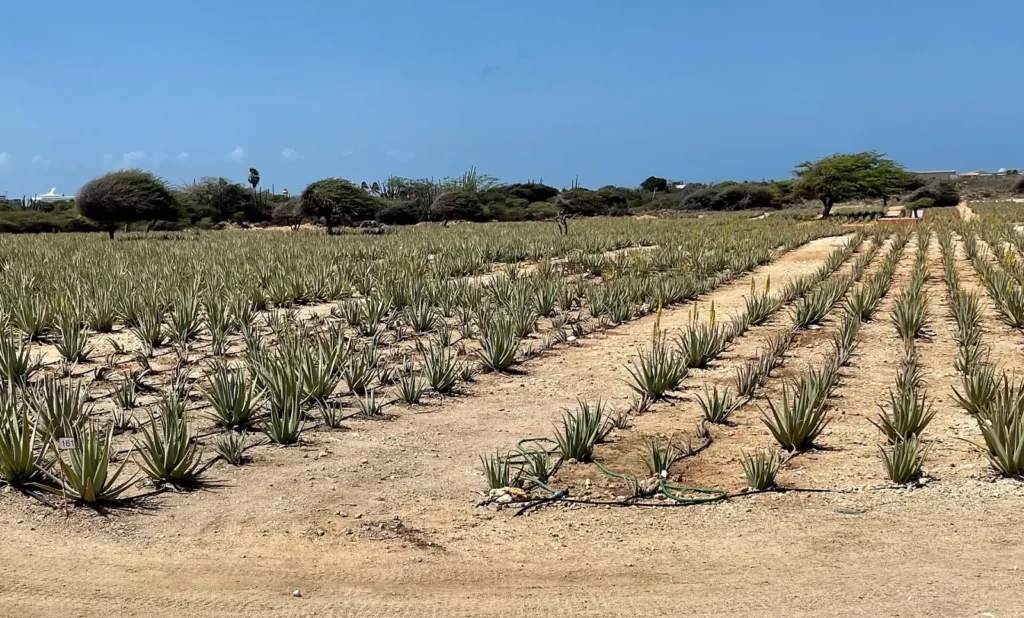
If you buy one thing, make it aloe. Aruba Aloe has grown and processed aloe in Hato since 1890, and it’s one of the few things Aruba actually makes and sells abroad. In 2022 it officially became Royal Aruba Aloe, the first company outside the Netherlands to get the Dutch royal title. I like it for a practical reason: it’s great for burns and sunburns, and this close to the equator, somebody in your group is going to need it.
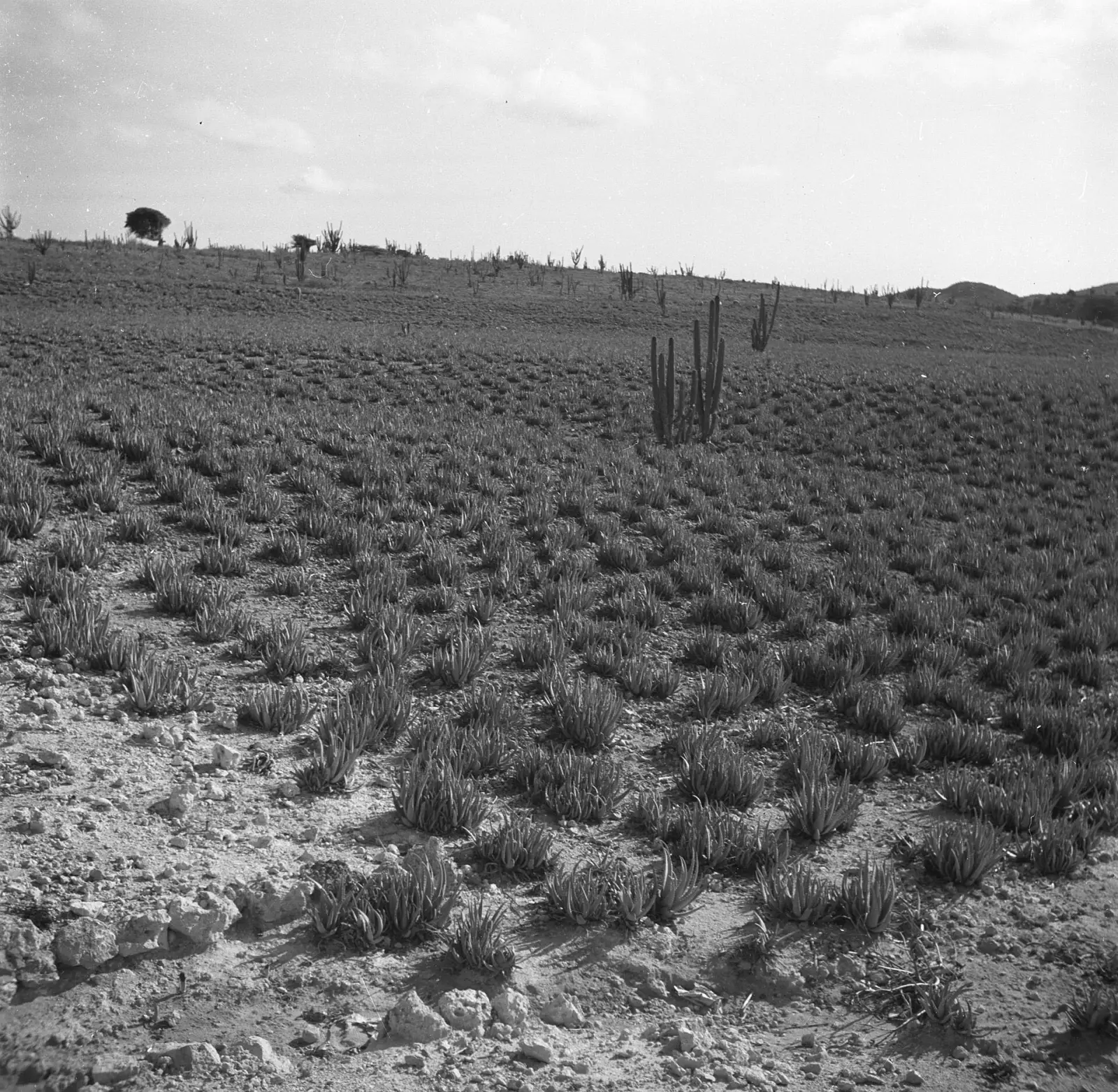
Aloe arrived on Aruba by the 1840s. At one point about two-thirds of the island was planted with it, and in the early 1900s Aruba was among the world’s biggest aloe exporters. Back then the product wasn’t the clear gel. It was the bitter yellow sap, boiled down into a hard gum that pharmacies sold as a laxative under the name “Curaçao aloes.” The company started making skin care in 1968.
Aruba’s aloe still has a medical side in the Netherlands. Aloe gel from Aruba is the main ingredient in Alhydran, a cream for burn and scar aftercare that Dutch pharmacies sell as a medical device.
Does it actually work? The US National Institutes of Health says aloe gel may help burns heal faster and hurt less, and dermatologists suggest an aloe moisturizer to soothe sunburned skin. The studies are small, though, and aloe won’t prevent a sunburn. A bad burn needs a doctor, not a souvenir.
Visit the Aruba Aloe factory and museum
Visiting the Aruba Aloe factory and museum, at Pitastraat 115 in Hato, is free. Tours start about every 15 minutes in English, Dutch, Spanish and Papiamento, or you can walk through on your own. You see a short film on the island’s aloe history, the fields, leaves being filleted by hand, and the lab and filling lines, and then you end up in the factory shop. Plan on about half an hour. It’s open every day, but the posted hours vary between sources, so check the tour page before you go.
What to buy and what it costs
- Pure aloe gel: $12 for 2.2 oz or $27 for 8.5 oz on the company’s US web store in October 2026. The Burn Aid gel costs the same.
- After-sun lotion: $14 for 2 oz, $30 for 8.5 oz.
- Small gifts: lip balms ($10), the aluminum-free deodorant ($10) and a trio of travel-size gels ($28).
- Sunscreen: SPF 30 runs $15–25. It doesn’t contain oxybenzone, which Aruba banned in 2020, so it’s fine to use here.
Besides the factory shop, there are more than a dozen Aruba Aloe stores around Oranjestad and the hotel strip, including Renaissance Marketplace and Paseo Herencia. The 2.2 oz sizes fit in your carry-on liquids bag. Forgot to buy some? The US web store ships to the US.
Skip bringing an aloe plant home. The US bans plants in soil, and bare-root plants need a plant-health certificate. One more reason to buy local: in 2019, Aruba Aloe paid for a coral nursery just off Savaneta, run by a youth dive group.
Aruban Hot Sauce: Pika and Pica di Papaya
My second pick is hot sauce. Aruba’s best-known one is papaya hot sauce, sold as pica di papaya. Yes, you can take it home, as long as you declare it and pack anything over 3.4 oz in your checked bag.
First, the word. In Papiamento, pika (also spelled pica) is simply what you call hot sauce, so it isn’t a brand. At local spots you’ll mostly meet the homemade kind: raw onions and hot peppers pickled in vinegar. At Zeerovers in Savaneta, ask for pika and pickled red onions (siboyo) with your fried fish. The pika at Chachi’s snack truck in Pos Chiquito is dynamite. The bottled kind is pica di papaya: green papaya, mustard and spices with the island’s Madame Jeanette peppers.
Which Aruban hot sauce to buy
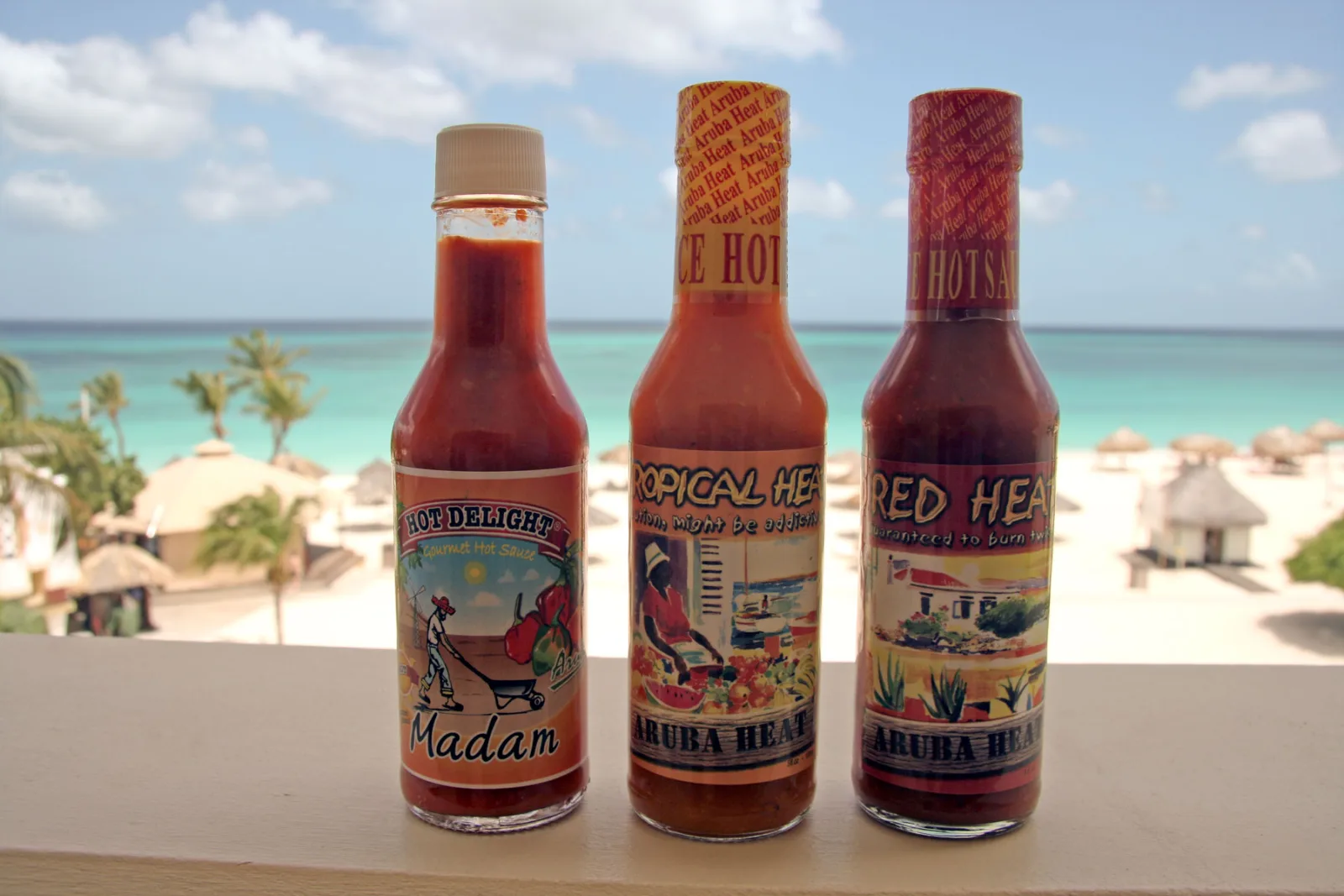
- Hot Delight is the classic. Aruba’s tourism board calls it the island’s first commercially produced hot sauce. Aurelio Ruiz turned his grandfather’s recipe into a company in 1993, starting out in recycled baby-food jars, and his children run it today. The Papaya is mild. The Madam, made with habaneros and Madame Jeanette peppers, is their hottest.
- Aruba Heat was started by chef Michel Frank in 2008 and is still cooked and bottled by hand in Oranjestad. Besides papaya there’s mango, pineapple and a Madame “Red Heat,” plus a few that are frankly a dare. Its 2 oz Mini Trio is small enough for your carry-on.
- Looking for “Madame Janette” hot sauce? You probably mean one of the Madame sauces above. The name comes from the Madame Jeanette pepper.
Buy it at the supermarket. In October 2026, a 5.7 oz bottle of Hot Delight papaya cost about AWG 14–15 (roughly $8) at Ling & Sons and Super Food Plaza. Aruba Heat’s papaya was about AWG 22 ($12.50). Both brands are also sold in souvenir shops. Ordering them online from home costs more once shipping is added.
Can you bring Aruban hot sauce home?
- To the US: yes. As a rule, US Customs and Border Protection allows condiments and packaged spices, but you must declare all food at the US preclearance in Aruba’s airport. Sealed, store-bought bottles are the safe choice. A homemade jar of raw onions and peppers is up to the officer, and it could be taken.
- Carry-on or checked? Hot sauce counts as a liquid, so anything over 3.4 oz (100 ml) goes in your checked bag. Tape the cap, put each bottle in a zip-top bag and pack it in the middle of the suitcase between clothes.
- To Canada or the Netherlands: bottled sauce is fine. Canada asks you to declare all food. The EU’s ban covers meat and dairy, not a meat-free, dairy-free sauce.
Glass From Aruba’s Glass-Blowing Studios
For something handmade you can’t find anywhere else, visit one of the island’s glass studios. You can watch the glassblowers at work, and you can make your own piece to take home.
- Studio Murano Art & Restaurant, Ayo 22, near the Ayo Rock Formations. It makes blown glass in the Murano tradition, in a converted cunucu house with a shop and a restaurant. There are free demonstrations daily from 10 am to 1 pm, though times vary. The class takes about 30 minutes, one person at a time, for ages 10 and up. In October 2026 it cost $100 for a bird, heart, starfish or ornament, up to $170 for a blowfish. The piece has to cool overnight, so you pick it up the next day.
- Terrafuse Aruba Glass Ceramics, Turibana, Noord. This non-profit, started in 2008, runs a glass studio that blows glass partly from discarded bottles. It has walk-in tours on Mondays and Thursdays from 10 am to 1 pm. A three-hour beginner glass-bead workshop costs $125.
Glass travels best in your carry-on, wrapped in a couple of T-shirts.
Art and Crafts Made in Aruba (and How to Tell)
For the most authentic Aruba souvenirs, look for the SEYO seal. Seyo Nacional pa Artesania is the Department of Culture’s mark for locally handmade crafts, awarded since 2012. Aruba’s tourism board says souvenirs without it are most likely made elsewhere. The other good test is to buy where you can meet the maker.
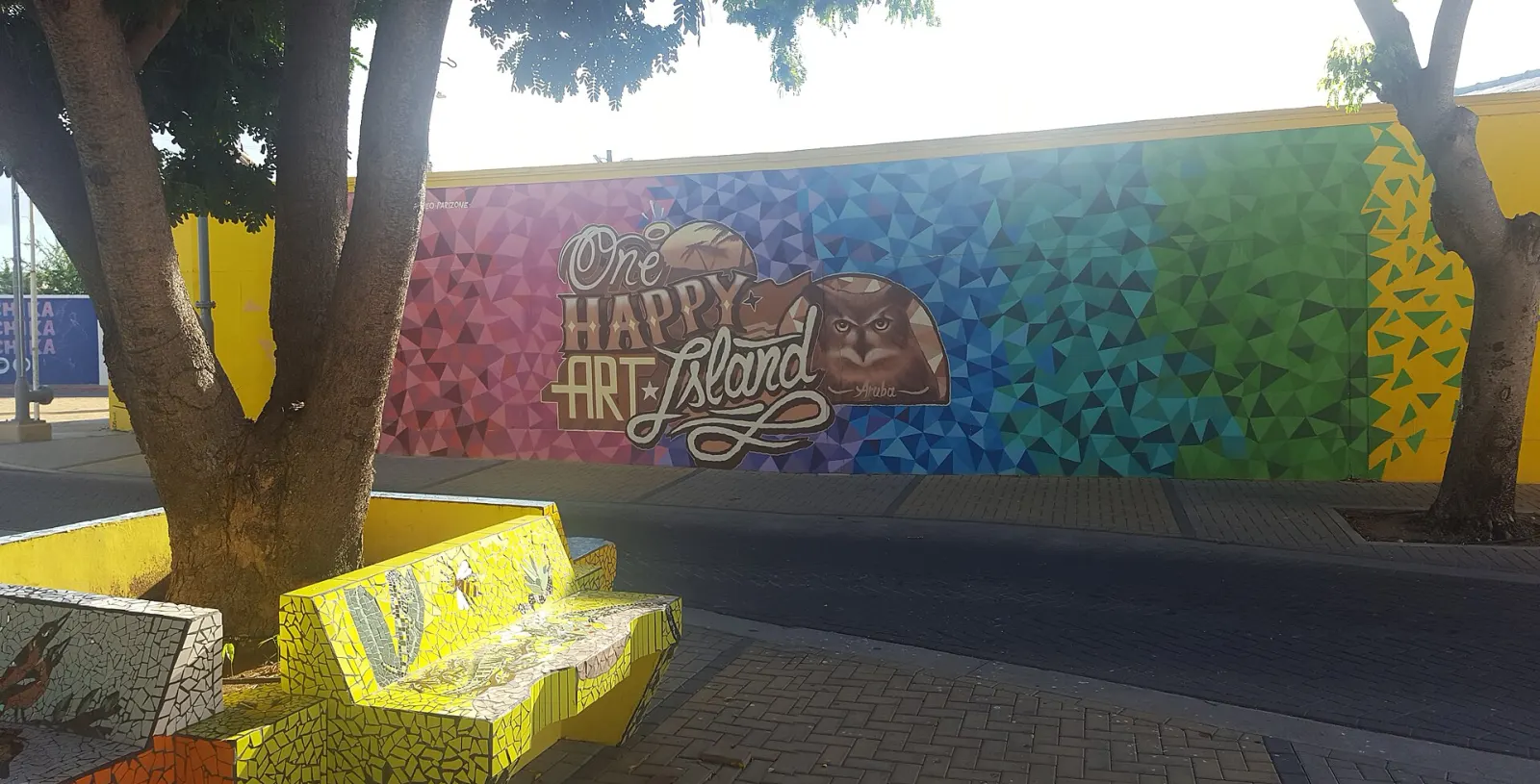
San Nicolas: the art town, 10 minutes from Savaneta
- Space21, B. van de Veen Zeppenfeldstraat 6, with a second shop on Main Street in Oranjestad. It sells original art, jewelry, candles and gifts from more than 40 Aruban makers, Monday to Saturday from 9 to 5.
- ArtisA Gallery, at the same address, has been a non-profit art hub since 2016. It’s also the starting point for Aruba Mural Tours, a two-hour tour of the town’s street art for $30.
- The San Nicolas Pop-Up Market fills Plaza Lolita on the last Saturday of every month except December, from 9 am to 2 pm. More than 60 vendors sell art, crafts, local pepper sauces, flavored liquors, produce and food, with steelpan music. It’s free to get in.
- The Aruba Art Fair takes over downtown San Nicolas every September, with more than 100 artists.
- Sun Kulture, an Aruban brand with a boutique in San Nicolas, sells swim shorts and shirts printed with hand-painted Aruba scenes.
Elsewhere on the island
Near Palm Beach, the Artists Co-Op (also called The Atelier “Made in Aruba”) in the back of Paseo Herencia mall is run by a group of local women. They sell glass jewelry, driftwood art, ceramics, paintings and candles. Look out for ceramic “Ayo bowls” by Rani Varde, shaped after the Ayo rock formations, and for sea-glass jewelry by local makers.
One correction to older guides: they still send you to Cosecha, the island’s creative-design store. Its galleries in Oranjestad and San Nicolas closed in 2021.
Food and Drink to Bring Home From Aruba
Beyond hot sauce, the best edible souvenirs are Aruba’s own beer and spirits, plus the Dutch treats that fill the island’s supermarkets.
- Balashi beer. This is Aruba’s own pilsner, brewed since 1999 with desalinated water, and it’s hard to find outside the ABC islands. Since October 2026, the Balashi Beer Experience near Eagle Beach has run tastings for visitors 18 and up, from $39. Cans go in the checked bag. A Balashi shirt or bottle opener is easier.
- Rum and gin distilled in Aruba. Pepe Margo Distillery in Oranjestad distills rum and gin on site and makes an aloe liqueur; its barrel tasting is $55. Red Anchor Distillery in Noord makes vodka, rum, gin and whisky, and you can walk in for free. Bodegas Papiamento blends Caribbean rums and bottles them under its own label.
- Coecoei. This red, lightly anise-flavored agave liqueur is a key ingredient in the Aruba Ariba, the island’s signature cocktail since 1963. Bottles are hard to track down, so if you spot one, grab it.
- Dutch cheese and sweets. Aruba is part of the Kingdom of the Netherlands, so the supermarkets are full of Gouda, Edam, stroopwafels and speculaas cookies. They’re not Aruban, but they make good gifts. In October 2026, a 500 g piece of cumin Gouda cost ƒ13.95 (about $7.75) at Super Food Plaza. The US allows solid cheese; just declare it.
- Aruban sweets. Look for cocada (coconut candy) and tentalaria (peanut or cashew brittle) in the island’s tokos, the little corner shops, and in bakeries.
- Coffee and honey. Island Grind and a few other local companies roast imported beans on the island. Eco Living Aruba in Pos Abao sells raw honey from its 50-plus hives. Both are allowed into the US.
Popular “Aruba Souvenirs” That Aren’t From Aruba
None of these are bad buys, but know what you’re getting:
- Delft Blue pottery is Dutch. Genuine pieces are marked “Delfts Blauw” on the bottom, and cheap look-alikes are everywhere.
- Larimar, the pale blue stone, comes from the Dominican Republic.
- Mopa mopa carvings are a South American lacquer craft.
- Blue Curaçao is made on Curaçao.
- Most of the cheap trinkets at the stands near the cruise terminal and along Palm Beach are imported, according to Aruba’s own tourism board.
Where to Buy Souvenirs in Aruba
| Where | Best for | Good to know |
|---|---|---|
| Main Street (Caya G.F. Betico Croes), Oranjestad | Space21’s second shop, perfume, everyday shopping | A short walk from the cruise port |
| Renaissance Marketplace and Renaissance Mall | Aruba Aloe and souvenirs (Marketplace); luxury brands (Mall) | The Marketplace opens every day |
| Royal Plaza | Souvenir shops, duty-free jewelry | Across from the cruise terminal; closed Sundays |
| Paseo Herencia, Palm Beach | The Artists Co-Op, Aruba Aloe | Open in the evening |
| San Nicolas | Space21, ArtisA, Sun Kulture, the monthly Pop-Up Market | About 10 minutes from Savaneta |
| Supermarkets (Super Food Plaza, Ling & Sons) | Hot sauce, Gouda, stroopwafels, Balashi | The biggest selection of food gifts, at local prices |
| The airport | Last-minute aloe or hot sauce | Many shops past security have been closed since May 2026 for construction |
Many shops close or keep short hours on Sundays, though malls near the port may open when a cruise ship is in. US dollars are accepted almost everywhere, but some shops won’t take $50 or $100 bills, and your change may come back in florins. Bring small bills for the markets. Main Street and the malls are easy to fit into a day in Oranjestad, and our guide to the best things to do in Aruba covers the rest of town.
Souvenir shopping near Savaneta
Staying with us in Savaneta? San Nicolas is the souvenir run I’d make. Space21 and ArtisA are on the same street, Sun Kulture is nearby, and if you’re here on the last Saturday of the month, there’s the Pop-Up Market. For groceries, Super S-Chow is a short walk from our villas. For the biggest selection of hot sauce and Dutch cheese, drive to Super Food Plaza or Ling & Sons near Oranjestad.
And the one free souvenir: paddle one of our kayaks out to Sea Glass Island and pick out a few pieces of sea glass.
Is Shopping in Aruba Cheaper Than at Home?
Sometimes, but Aruba isn’t tax-free. Since 2023, a combined 7% turnover tax has been built into shelf prices. The duty-free stores selling watches, jewelry and perfume can be good value, but check what the same item costs at home before you buy. For food gifts, you’re paying island grocery prices, which Aruba’s tourism board puts at about 5–6% above the US.
What You Can’t Bring Home From Aruba
Leave the beach on the beach. It’s against the law to take seashells, coral (even dead pieces), sand, sand dollars or dried sea stars out of Aruba. Since 2021, Aruba Customs has fined travelers caught with shells at the airport. If you’ve got some in your bag, you can still throw them away at check-in.
- Shells and coral: Aruba’s nature law bans exporting corals, conch, sea turtles and other protected species, dead or alive. The Marine Park rules also ban taking shells, coral, rocks or sand out of the park. If you snorkel or dive here, the reef rules in our Aruba shore diving guide apply too.
- Sand: exporting it needs a government permit.
- Sea glass is the exception. It’s man-made glass, not a natural resource, and local kayak tours tell guests they’re welcome to collect a few pieces. Take a handful, not a bucket, and leave the shells and coral that wash up next to it.
- Turtle shell and black coral: don’t buy anything made from them. Aruba bans their export, and tortoiseshell is banned from the US.
- Cuban cigars and rum: enjoy them on the island, but since 2020 US travelers can’t bring them home.
- Fresh fruit, plants and meat: almost all fresh fruit and vegetables are banned from the US, and so are plants in soil and most meat products, including bouillon and soup mixes.
Getting Your Souvenirs Home: Customs, Liquids and Packing
You clear US customs in Aruba. Aruba’s airport is one of a handful abroad with US preclearance: you go through US customs and agriculture inspection before you board, and you land in the US as a domestic passenger. Here’s what that means for your Aruba souvenirs:
- Declare all food. The airport’s own list of items that are fine once declared includes hard cheese, seafood and bakery items without pork or beef. If you declare something that isn’t allowed, it’s simply taken. If you don’t declare it, you can be fined.
- The US duty-free allowance is $800 per person. Adults 21 and over can bring 1 liter of alcohol duty-free, or 2 liters if at least one was made in Aruba, because Aruba is a Caribbean Basin country. Beyond that you pay duty. The tobacco limit is 200 cigarettes and 100 cigars (CBP’s exemptions page has the details).
- Liquids: the 3.4 oz (100 ml) rule applies at Aruba’s airport. The airport allows duty-free liquids bought past the screening checkpoint in the cabin. In checked bags, you can carry up to 5 liters per person of drinks between 24% and 70% alcohol.
- Packing: tape the caps, bag every bottle, pad them with clothes, and carry glass and ceramics on board. The airport asks you to leave gifts unwrapped for inspection.
- Going home to Canada? After 48 hours away you can bring CAN$800 in goods, including 1.14 L of spirits, 1.5 L of wine or 8.5 L of beer, and you must declare all food.
- Going home to the Netherlands? Aruba is outside the EU, so EU rules apply: no meat or dairy in your luggage. Yes, that includes the Gouda.
Aruba Souvenirs FAQ
What is Aruba known for buying?
Aloe is the classic, from Aruba Aloe, which has made it on the island since 1890. Papaya hot sauce, locally blown glass and art by Aruban makers come next. Duty-free watches and jewelry are also popular, but compare prices with home first.
What are good Aruba souvenirs under $20?
A travel-size Aruba Aloe gel ($12), a lip balm ($10), a bottle of Hot Delight papaya hot sauce (about $8 at the supermarket), a piece of Gouda, cocada or tentalaria from a toko, or a bag of locally roasted coffee.
Can you take seashells from Aruba?
No. Taking shells, coral, sand dollars, dried sea stars or sand out of Aruba is against the law, and Customs fines travelers caught with shells at the airport. Sea glass is the exception: a few pieces are fine.
Can I bring Aruban hot sauce on the plane?
Not in your carry-on if the bottle is over 3.4 oz (100 ml), which most are. Pack it in your checked bag, or buy Aruba Heat’s 2 oz minis. Either way, declare it at US preclearance in Aruba.
Is Aruba duty-free?
Not completely. Aruba has no VAT, but a combined 7% turnover tax has been built into shop prices since 2023. Duty-free shops sell jewelry, watches, perfume and liquor, and US travelers get an $800 duty-free allowance coming home.
Is Aruba Aloe worth it?
If you want something genuinely made in Aruba, yes. It costs more than drugstore aloe, but it’s grown and bottled on the island by a company with more than 130 years of history. The travel sizes make easy gifts, and the factory tour is free.
What are good Aruba souvenirs for kids?
Kids 10 and up can blow their own glass starfish or turtle at Studio Murano Art. Other easy wins are Aruba Aloe lip balms, stroopwafels, replica Aruba license plates and divi-divi tree keychains.
Can I pay with US dollars in Aruba?
Yes, almost everywhere, though some shops won’t take $50 or $100 bills and may give change in florins. Cards are widely accepted. Bring small bills for markets.
Bring a Little Aruba Home
The south coast is a good base for hunting Aruba souvenirs: San Nicolas’s makers are 10 minutes away, and the sea glass is a kayak ride from our beach. Most of our villas have full kitchens, so the hot sauce can get a proper test on fresh fish before it goes in your suitcase. The Beachfront Two-Bedroom Villa has a full kitchen, an outdoor kitchen and a covered beachfront patio, and every villa comes with free kayaks. For the fish itself, start with our Savaneta restaurants guide, and for the rest of your trip, see our Aruba things-to-do guide.
Planning your trip? See our beachfront villas and check availability.
About the author: Dan has been part of the Savaneta community for more than 20 years and runs Peachy Beach, a handful of beachfront villas on the Savaneta waterfront. The prices, hours and rules in this guide were checked in October 2026 against the makers’ own sites, Aruba’s tourism board and airport, US Customs and the TSA. Nobody paid to be included. We do rent villas on this coast, so we’ve tried to be straight about what’s genuinely Aruban and what isn’t.
Found a shop that’s closed, a price that’s changed or a maker we should know about? Tell us and we’ll update this page.
Top photo: the aloe fields at the Aruba Aloe factory in Hato, by Caribiana via Wikimedia Commons, CC BY-SA 4.0. Other photo credits are in the captions.